Monday, January 4, 2016

Luxarazzi 101: Beneš Decrees

In 1937, at the funeral of the first Czechoslovak President, Tomáš Garrigue Masaryk, six soldiers carried the founding father’s coffin. Each of them represented the six largest nationalities residing in pre-war Czechoslovakia: Czech, Slovak, Hungarian, German, Polish and Ruthenian. Already a year later, the coexistence of the various ethnic groups in the country had been changed drastically by the Munich Agreement. The Agreement, signed by Germany, France, the United Kingdom and Italy, gave Nazi-Germany the right to annex parts of Czechoslovakia along the German border with a predominantly German-speaking population, also known as Sudetenland.

Czech districts with 25% or more ethnic German population in 1935
(Source: Wikimedia Commons)
As a result of the Munich Agreement, under the first Vienna Award, Czechoslovakia was forced by Germany and Italy to cede southern Slovakia, about one third of Slovak territory, to Hungary, while Poland invaded Zaolzie territory shortly after. The much smaller Second Czechoslovak Republic, established in late September 1938 and composed of Bohemia, Moravia, Silesia and the autonomous regions of Slovakia and Subcarpathian Ruthenia, only lasted 169 days. On March 14, 1939, the  independent Slovak Republic, a client state of Nazi Germany, was established. The very next day, the Germans occupied the remainder of the country and yet another day later (March 16), they established the Protectorate of Bohemia and Moravia by a proclamation of Adolf Hitler from Prague Castle.

For the Czechs of the Protectorate Bohemia and Moravia, German occupation represented a period of brutal oppression as the aim of the Nazis was to "germanize" the Protectorate. An estimated 36,000 to 55,000 ethnic Czechs lost their lives due to political persecution and deaths in concentration camps. Two of the worst autrocities were the massacres of Lidice and Ležáky, two villages that were razed to the ground and their adult male inhabitants killed with women and children deported to concentration camps as a reprisal for the assassination of Reich Protector Reinhard Heydrich. It is said that up to 360,000 living in the Protectorate, about 270,000 Jews and 8,000 Romani people, were killed until 1945.

Meanwhile while in exile in London, the Czech government drew up a series of laws which dealt with various aspects of the restoration of Czechoslovakia and its legal system, denazification and reconstruction of the country. Officially the Decrees of the President of the Republic but better known as the Beneš Decrees, they were drafted by the Czechoslovak government-in-exile under President Edvard Beneš between 1940 and 1945. The Decrees were later retroactively ratified by the Interim National Assembly of Czechoslovakia on March 6, 1946.

President Edvard Beneš
While there were some 143 decrees, the - to this day - most talked about are the ones dealing with the ethnic Germans (and Hungarians). In fact, they were also applied to the Princely Family of Liechtenstein and all other Liechtenstein citizens who owned properties in Czechoslovakia on the basis that they spoke German and were thus considered German.

The "Decree of the President concerning modification of Czechoslovak citizenship of persons of German and Hungarian ethnicity" stripped all Czechoslovaks of German or Hungarian ethnicity who had gained German or Hungarian citizenship of their Czechoslovak citizenship. The only way they could stay a Czechoslovak citizen if they had declared Czech or Slovak ethnicity after May 21, 1938, or prove that they remained loyal to the Czechoslovak Republic, did not commit offenses against the nation and either took part in the liberation of Czechoslovakia or were subject to Nazi or fascist terror - one of the people who would have actually been able to prove that was Prince Adolph of Schwarzenberg, husband of Luxembourg's Princess Hilda, though once the courts decided in his favour, a special law, the Lex Schwarzenberg, to strip him of his properties.

Another decree, the "Decree of the President concerning the confiscation and expedited allotment of agricultural property of Germans and Hungarians, as well as traitors and enemies of the Czech and Slovak nation", confiscated all agricultural property owned by, among others, Germans and Hungarians, notwithstanding citizenship, with exception of those who actively took part in the fight for preservation and liberation of the state. This one was the decrees that was applied to the Liechtenstein family as well as some of their relatives, such as the Kinskys.

Source: The Economist
While none of the Beneš Decrees actually deal with the topic of expulsion of German and Hungarian nationals from Czechoslovakia, they are still associated with the displacement of about 3 million Germans and Hungarians in the months and years following the Second World War. The Potsdam Agreement between the United Kingdom, the United States and the Soviet Union actually stated, "The Three Governments, having considered the question in all its aspects, recognize that the transfer to Germany of German populations, or elements thereof, remaining in Poland, Czechoslovakia and Hungary, will have to be undertaken. They agree that any transfers that take place should be effected in an orderly and humane manner."

However, when the Potsdam Conference began, the expulsion of the Germans and Hungarians had already started, some of the violently. There are a number localised massacres of the German population recorded especially for the summer of 1945. A joint German and Czech commission of historians estimated that there were around 15,000 Germans who died during the time caused by violence or abnormal living conditions. Estimates say that around 300,000 Germans were at one point or the other interred in "concentration camps" by the Czechoslovak, one of those was Princess Marie of Liechtenstein.

To this day, the Beneš Decrees cloud international relations. Back when the Czech Republic and Slovakia joined the European Union, it was a much discussed topic. And only in 2009, the Principality of Liechtenstein took up official relations with both of these countries. A year later, a commission of Liechtenstein and Czech historians was formed and have sinced published a number of reports. It is still a topic though when Prince Hans-Adam II visits the Czech Republic, and it is likely to stay that way for many years (and thus posts) to come.

Sunday, January 3, 2016

Luxarazzi 101: Princess Hilda of Luxembourg, Princess of Schwarzenberg

The third daughter of Grand Duke Wilhelm IV and Grand Duchess Maria Ana led a rather unconventional life that differed drastically from that of her sisters, guided by interests in botany and wildlife that eventually led her to Africa. Hilda Sophie Marie Adelaide Wilhelmine was born on February 15, 1897, at Château de Berg.  She was named for her paternal aunt Hilda, Wilhelm's only surviving sibling and eventually the last Grand Duchess of Baden.

Although the six sisters were all quite close, Hilda had a lifelong bond with her next older sister, Charlotte. The two were separated in age by just over a year and both enjoyed relatively long lives, unlike their four less fortunate sisters. As a young child, she and Charlotte played many pranks together in Luxembourg. "Do as Hilda does" became a common saying among the children of the Grand Duchy. Hilda was also known as the most temperamental of her sisters - Hilda's "Braganza temper" inherited from her mother's Portuguese family meant she was very quick to anger.

Hilda as a young woman
Hilda was a lover of the outdoors from her youth. She was said to be rather athletic and enjoyed tennis in particular, preferring sports to court functions. Hilda also took great interest in science, especially botany and agriculture, interests she maintained throughout her life. Hilda's "tomboy" ways were said to be something of a concern to her family as her actions were interpreted as being a refusal to "grow up and assume the airs and dignity of a royal young lady."

During World War I, Hilda and her sisters were rumored to be of great interest as brides of their German occupants. Prince Sigismund of Prussia, nephew of Kaiser Wilhelm II, apparently took an interest in marrying Hilda. So great was her hatred of the idea that Hilda allegedly threatened to enter a convent to avoid marrying Sigismund. Whatever the case, Sigismund married a fellow German after the war and Hilda remained single for the time being.

During the abdication crisis of 1919, Hilda was briefly considered as the future Grand Duchess as her sister Charlotte's engagement to Prince Felix of Bourbon-Parma, a soldier in the Austro-Hungarian army, was unpopular. Hilda had no interest in the role and the next sister Antonia was considered equally unsuitable as she was engaged to a German. Elisabeth and Sophie, the fifth and sixth daughters, were thought to be too young to rule. So Charlotte became the Grand Duchess after all, and eventually a very popular one at that. From the start of her sister Charlotte's reign on January 14, 1919, until the birth of her nephew Prince Jean nearly two years later, Hilda the heir presumptive to the grand ducal throne.

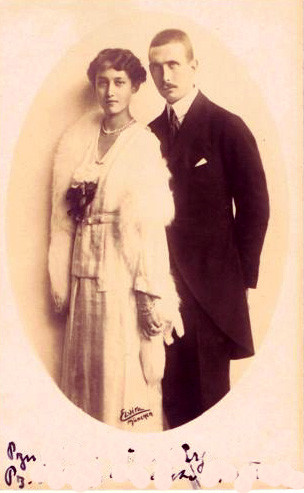
Hilda and Philipp Albrecht at the time of
their engagement
The fact that she was so close to the Luxembourg throne did play into Hilda's life once more a short while later. In 1920, Hilda met Duke Philipp Albrecht of Württemburg. Although he came from the junior and Catholic line of the family, Philipp Albrecht was expected to one day take the headship of the family as the senior line was about to die out in male line. It is thought that the couple found common ground in their shared interest in agriculture, as the Württemburg family fortune was invested heavily in farming and vineyards.

The couple became engaged the same year, but the engagement was cancelled soon afterward. As Hilda was also the heir to the Grand Duchy at the time, the prospect of a possible German consort so soon after World War I was deeply unpopular with the Luxembourgish public. The French Foreign Ministers also did not approve of the engagement. Luxembourg's economic union with France thus made the match doubly unacceptable. Hilda remained single once again.

Following the death of her sister Marie-Adelaide in 1924, Hilda was the only unmarried Luxembourgish princess. As a result, a great deal of interest was taken in Hilda's prospective husbands. Hilda's name was frequently mentioned as a possible spouse for the future King Edward VIII of the United Kingdom but as she was a Catholic, it's doubtful whether there ever were any actual consideration for the match. In the end Hilda found a husband without a royal title, but with whom she shared many intellectual interests and pursuits.

Prince Adolph of Schwarzenberg was a Czech noble from a very prominent and wealthy family. The Schwarzenbergs owned a vast amount of palaces, hunting lodges, and estates in different parts of the former Austro-Hungarian empire. The family also maintained a large and valuable art collection. As the oldest of eight children, Adolph was raised to manage the family's holdings as his primary occupation. After earning a law degree from the University of Prague and fighting in World War I, Adolph began managing the Schwarzenberg assets. He became the 10th Prince of Schwarzenberg upon his father's death in 1938.

Although it is unknown exactly when and how the couple met, it is likely that they too developed a relationship based on their shared passion for botany, wildlife, and the outdoors. As she was the only one of Grand Duchess Charlotte's younger sisters not to marry a German national, Hilda was able to have her wedding in Luxembourg. Hilda married Adolph on October 29, 1930, at Château de Berg. She was the last of her surviving sisters to marry by nearly a decade.

Adolph had taken a trip to Africa early in 1930 and adored the continent. The couple then decided to spend their honeymoon hunting there. Hilda and Adolph traveled to several different areas including Sudan and Congo, but Kenya was by far their favorite.
The former Mpala Farm, now Mpala Research Centre / Princeton University
Three years later, the couple acquired a 999 year lease on a farm in Laikipia, Kenya from the Wilmots, a British family. Hilda and Adolph named the estate Mpala Farm. The couple put a great deal of work into the property, overseeing the construction of a dam, a powerhouse, an irrigation system, and a bridge (now known as The Princess Hilda Bridge) connecting the estate to the nearest town. Hilda and Adolph also spent considerable time at Mpala Farm with their relatives, including their large group of nieces and nephews. Although Hilda and Adolph did not have children of their own, they were a devoted aunt and uncle.

Adolph and Hilda maintained a steadfast anti-Nazi stance during the rise of the Third Reich. Adolph refused insistence from the Third Reich to replace Czech workers at his farms with ethnic Germans; he also welcomed Jewish patrons to the gardens of his palace in Vienna whereas they were banned from most other parks and leisure establishments. Adolph was bold enough to put up signs that read "Jews warmly welcome" in response to the "Jews unwelcome" signs in most other locations.  Adolph also refused to receive Adolf Hitler at any of his homes. All of this effectively made Hilda and Adolph enemies of the state.

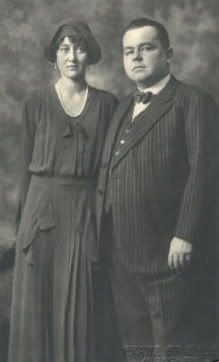
Hilda and Adolph in the 1930s
Around that time, Adolph had gotten into an argument with a Prague banker over the German Endsieg (the ultimate victory, a part of Nazi ideology that no matter how great the losses, the Third Reich would ultimately prevail and that a breakdown of allegiance to it could not be tolerated), with Adolph claiming that the Germans would certainly lose the war. The banker reported the argument to the Nazi authorities, who made attempts to arrest Adolph. In August 1940, all his properties including 55,000 hectares of land, various businesses, multiple castles and the family's art collection were seized. The couple left occupied Czechoslovakia for their villa in Bordighera, Italy.

After a short stay in Bordighera, Adolph and Hilda spent some time at another Schwarzenberg property in Switzerland.  The two joined Grand Duchess Charlotte and her family in the United States, arriving in New York on April 17, 1941, aboard the Atlantic Clipper. The couple traveled as Swiss nationals and insisted on dropping their princely titles to travel as ordinary citizens.

The Schwarzenbergs stayed in the United States for over four years. The two owned Coaching Lane Estates, a 2,000 acre property near Brownsville, Vermont.  In July 1942, while the couple were living in the US, the former Grand Duchess Maria Ana passed away. Both Hilda and Charlotte were by their mother's side when she died.

Hilda and Adolph returned to Europe in October 1945, flying once again on the Atlantic Clipper out of New York. However, Adolph never got his Czech properties back. After courts decided that the Benes decrees could not be applied to him, the Lex Schwarzenberg was passed in 1947 that seized all properties from the family by the Communists.  Hilda and Adolph spent as much time as they could at their beloved Mpala Farm, visiting for the last time at Christmas 1949.

Adolph died of a heart attack in February 1950 while staying at their villa in Bordighera, Italy, after suffering from ill health for some time.  After her husband's death, Hilda moved back to Luxembourg where she lived surrounded by her sister Charlotte's family. She sold Mpala Farm two years later.

Hilda died on September 8, 1979, at Château de Berg, the same place where she began her life. In the years following her death, Mpala Farm became a research and wildlife conservation center, which it remains to this day.

Saturday, January 2, 2016

More Liechtenstein New Year's Interviews

Photo: Radio L
Let's take a quick break from our 12 days of Christmas series for some more Liechtenstein New Year's interviews, shall we? We shall. Both Prince Hans-Adam II and Hereditary Prince Alois were at it again, this time changing mediums. While the Fürst talked to TV a few days ago, he now gave a radio interview. Meanwhile, the Hereditary Prince switched from newspaper to TV. The whole interview can be found at 1 FL TV.

Luxarazzi 101: The Order of Civil and Military Merit of Adolph of Nassau

The Order of Civil and Military Merit of Adolph of Nassau (French: Ordre de Mérite civil et militaire d’Adolphe de Nassau) was created by Grand Duke Adolph on May 8, 1858, when he was still Duke of Nassau. As a matter of fact, it is originally an Order of the Duchy of Nassau. Grand Duke Adolph named the order not after himself but after his medieval ancestor Adolph of Nassau, Roman-German King, who reigned from 1292 to 1298. After the Duchy of Nassau was annexed by Prussia in 1866 the order was not awarded anymore. After Adolph became Grand Duke of Luxembourg he restored the Order in 1890 as a Luxembourgish one. 
Badge of the Grand Cross, observe

The statutes of the order changed several times, for the last time they were modified in 1927. Already since 1909, the order has eight grades: Grand Cross, Grand Officer, Commander of the Crown, Commander, Officer of the Crown, Officer, Knight of the Crown and Knight. There is also a female equivalent for Commander, the so-called Cross of Honour for Ladies. There are also crosses and medals as part of the Order of Civil and Military Merit of Adolph of Nassau. They are given either as gold or silver crosses or as gold, silver and bronze medals.

The badge of the order is a gold cross, enameled in white and it features eight points, each with a white pearl at its end. In its centre is a white-enameled medallion which features a golden "A" for Adolph. It is surrounded by an imperial crown. The whole medallion is circled by a laurel crown on a blue-enameled background with the order’s motto “virtute”. The years “1292” and “1858” are engraved on the back. The military grades also feature two crossed swords under the medallion.
Plaque of the Grand Cross
The plaque consists of a silver star with eight rays and the central medallion is identical to the one of the badge. The military version features again two crossed swords under the medallion.
The ribbon is blue with orange edges, these are the colours of the Duchy of Nassau. The ribbon of the Officer features a rosette in identical colours.

reverse
The order is awarded to foreign heads of state but also to individuals for their meritorious service to the Grand Duke, the Grand Ducal House or Luxembourg or their loyalty to the Grand Duke or the Grand Ducal House or Luxembourg respectively. In addition the order honours scientists and artists who contributed in special way to Luxembourg. It is also handed out to foreigners with the consent of the foreign government. 

All grades of the Order of Civil and Military Merit of Adolph of Nassau are bestowed by Grand Ducal decree and countersigned by the chancellor of the order. All princes and princesses of the Grand-Ducal House are born members of the order, but they do not receive its insignia until they are 18 years old.

The Order of Civil and Military Merit of Nassau is ranked lower than the Order of the Gold Lion of the House of Nassau and ranked higher as the Order of the Oak Crown. It should not be confused with the Order of Merit of the Grand Duchy of Luxembourg which we already discussed and which is the lowest ranked Luxembourgish order.

Friday, January 1, 2016

Luxarazzi 101: House of Wittelsbach

Happy New Year to all of you! And now back to our regularly scheduled coverage: 
a Luxarazzi 101 for the eighth day of Christmas...

The House of Wittelsbach - truth be told, about this family we could write about ten Luxarazzi 101s and would probably not been done with their history yet - after all they ruled Bavaria for a staggering uninterrupted 738 years. That's longer than the the Nassaus have ruled Luxembourg, the Liechtensteins Liechtenstein, the Bernadottes Sweden and the Glücksborgs Norway combined. As such, it won't come as a surprise to you that there are also numerous ties between the Wittelsbachs and the monarchies of Luxembourg and Liechtenstein - for example, Princess Antonia of Luxembourg was a Wittelsbach by marriage and Hereditary Princess Sophie of Liechtenstein is one by birth.

Otto I, Duke of Bavaria. A later
idealized version from Die Chronik Bayerns.
Ruling Bavaria as dukes (1180–1623), then prince-electors (1623–1806) and finally kings (1806–1918), the Wittelsbachs take their name from the former Burg Wittelsbach in Aichach. While the origin of the family isn't entirely clear - legend has it they either descent from Charlemagne or all the way back from the Trojans - one can say for certain that Count Otto I of Scheyern, born ca. 1020, is their oldest certain ancestor. Otto's grandson by the same name, Otto V, moved the family to Burg Wittelsbach. His son, Otto VI, after serving the German king and Holy Roman Emperor Friedrich Barbarossa, was invested duke of Bavaria, as Otto I in 1180. From that date until the abolishment of the monarchy in Germany in 1918, Bavaria was ruled by the Wittelsbachs.

During different points in history, the power of the Wittelsbachs exceeded the borders of their home, Bavaria. In 1214, the Electorate of Palatinate became part of the Wittelsbach claim, under the power of Duke Ludwig I, or Louis I, the seventh child but oldest surviving son of Duke Otto I (not to be confused with Count Otto I, mentioned above). For a little historical context, the Electorate of the Palatinate would remain part of the Wittelsbach territory until 1805. In 1806, Napoleon's reorganizations made Bavaria into a kingdom, and as of 1815, parts of the Electorate of the Palatinate joined Bavaria as the Rhine Palatinate.

Back to the 13th century, though, Duke Ludwig went on to father Duke Otto II, whose sons Henry and Louis then divided the Wittelsbach territory between themselves. It was not meant to last: the descendants of Duke Henry XIII of Lower Bavaria died out around the middle of the 14th century, and this region rejoined Upper Bavaria and the Palatinate under the rule of Duke Louis II's son.

This son, as it happens was not just Duke of a reunited Bavaria, however: he was also the first of two Holy Roman Emperors that the Wittelsbach family produced, and he held power as Emperor Louis IV. The second Wittelsbach Emperor would not make his appearance until the 18th century, with Charles VII.

Duke Rudolf I, shown on the right. From a
parchment located in Koblenz.
While the divided territories of Bavaria might have been rejoined in 1340, the family faced a split in 1329 that more or less remained in effect until 1777. The Treaty of Pavia, specific to the Wittelsbach clan, divided the family into two branches: the line of his brother Duke Rudolf I received the Upper Palatinate, while Emperor Louis IV retained the traditional territory of Upper, and then after 1340 Lower, Bavaria. But Louis IV's line itself expired in 1777, and the other surviving Wittelsbach branch absorbed the titles and territories.

But because there were over four centuries of two Wittelsbach branches, we'll quickly take a look at what happened to each. Emperor Louis IV's Bavarian branch of Wittelsbachs rapidly expanded their territory to incorporate Brandenburg and Tyrol, as well as Hainaut (modern-day Belgium), and Holland and Zeeland (modern-day Netherlands). Louis IV seems to have been wise in encouraging expansion, after giving up the Palatinate to the other branch of the family, since he left six sons of his own to inherit the newly acquired territories. Unfortunately for this branch of the Wittelsbachs, however, they did not retain the new regions for long. Before the end of the 14th century, Brandenburg and Tyrol had been transferred out of the Wittelsbach line, and by the end of the 15th century Hainaut, Holland, and Zeeland belonged to others as well. The Bavarian Wittelsbachs retained Bavaria, however, and for a brief time in the 16th century the County of Kladsko in Bohemia.

Perhaps fortunately for the Wittelsbachs, the Protestant Reformation gave them something to focus on instead of lost territories. As the family is traditionally Catholic, they committed themselves to fighting the Reformation and went on to assume high-ranking clerical roles throughout the 16th, 17th, and 18th centuries. Also in the 17th century (1623), under the rule of Duke Maximilian I, the Dukes of Bavaria also became Electors, and Bavaria itself became an Electorate. The 18th-century rule of Elector Maximilian II Emanuel also overlapped directly with the history of Luxembourg, as he was Duke of Luxembourg from 1712-1714. Maximilian II's son Charles became the aforementioned Holy Roman Emperor Charles VII, while also the King of Bohemia, but Charles VII's son Elector Maximilian III Joseph ended the Bavarian line with his death in 1777.

Elector Frederick V of the Palatinate and
King of Bohemia
Back to the Palatinate line, they had been given the power of Electors back in 1356, but the early 15th-century death of Elector Rupert III (also King of Germany and grandson of Duke Rudolf I) saw the Palatinate lands splintered into a number of different family branches. Around the middle of the 16th century, the Elector role passed to Frederick III, of the Palatinate-Simmern branch, who - unlike his Bavarian cousins - was a devout Calvinist. And he was not the first Protestant Elector Palatine: Frederick V, also King of Bohemia, led the predominantly Protestant Bohemian nobles in rebellion agains his Bavarian (and Catholic) cousin Elector Maximilian I, but lost. (As a point of interest, Frederick's wife Elizabeth Stuart was born a daughter of King James I of England, so that monarch lent what support he could to Frederick's cause. Also, Frederick's sons spent time in exile, and his third son - known as Rupert of the Rhine - went down in popular legend.) Frederick's son Charles I Louis did regain power, though, as future Elector of the Palatine.

By 1685, the Palatinate-Simmern line had reached its end, and the Elector Palatine role went to the (Catholic) Palatinate-Neuburg line, under the new Elector Philip William, whose mother had been born into the Bavarian line. The Palatinate-Neuburg ended in 1742, when the Elector Palatine was assumed by a member of the Palatinate-Sulzbach line. Remember, of course, that the Bavarian line ended in 1777, so it was Elector Charles Theodore of the Palatinate-Sulzbach line that ultimately gained control over Bavaria, as well as the Palatinate. His line was later succeeded by the branch Palatinate-Zweibrücken-Birkenfeld, but even this was a bit more complicated than expected. Initially, it was decided that the Palatinate-Zweibrücken branch would inherit the title of Elector of Bavaria, while the Palatinate-Birkenfeld line received the title Duke in Bavaria.

Princess Ludovika, mother of the future
Empress Elisabeth of Austria
The elevation of Bavaria to a kingdom in 1806 resulted in Maximilian Joseph of the Palatinate-Zweibrücken line becoming King of Bavaria. As for the line of Dukes in Bavaria, they also saw their descendants in illustrious roles. The first Duke in Bavaria, Wilhelm, became the great-grandfather of the Empress Elisabeth of Austria. Additionally, the Dukes in Bavaria frequently intermarried with the Kings of Bavaria, ensuring that the Wittelsbach lined remained closely knit: Duke Wilhelm in Bavaria married Maria Anna, sister of Maximilian Joseph, and his grandson Duke Maximilian Joseph married the sixth daughter of King Maximilian Joseph, Ludovika (born when her father was aged 52).

The House of Wittelsbach ended its nearly 740-year rule in Bavaria in 1918, when King Ludwig III released anyone in an official position from statements of loyalty to him as monarch and Bavaria became a republic. Ludwig died in 1921, but despite concerns about a public funeral, he and his wife Maria Theresa (who had died in 1919) were given an honorable burial in the crypt of their ancestors at Munich Frauenkirche, with Bavarian officials, members of the military, and an estimated 100,000 members of the pubic in attendance.

As for the remainder of the 20th century, many of the Wittelsbach family found themselves in concentration camps during World War II for their public anti-Nazi stance, among them Luxembourg's Princess Antonia who was married to the last Bavarian crown prince. In the 21st century, members of the Wittelsbach family can still be found. Duke Franz of Bavaria, was born in 1933 and is alive today. He is the son of Duke Albrecht of Bavaria. As Duke Franz doesn't have any descendants, the headship of the house will eventually pass to the descendants of one of his cousins, Prince Luitpold.

Perhaps more immediate for Luxarazzi readers, Hereditary Princess Sophie of Liechtenstein, married to Hereditary Prince Alois, is the daughter of Duke Max in Bavaria, also a son of Duke Albrecht of Bavaria. The seeming disparity in semantics is worth a closer look here: that is, the difference between Duke of Bavaria and Duke in Bavaria. Despite being the son of Albrecht and being a born Prince of Bavaria, however, Duke Max was actually adopted during adulthood by his grand-uncle Ludwig Wilhelm, Duke in Bavaria, giving Prince Max the right to use the title Duke in Bavaria (Herzog in Bayern). As Prince Max has no sons himself and the inheritance associated with the Duke in Bavaria title seem to have been distributed between his daughters, it's unclear what will happen to the title in the future.

Thursday, December 31, 2015

Luxarazzi 101: Counts of Merenberg and Their Claim to Luxembourg's Throne

One of the relatively rarely talked about but extremely interesting stories about the Grand Ducal Family is that of the Counts of Merenberg. Never heard of them? They are a morganatic branch of the Nassau-Weilburg family, the rulers of Luxembourg since 1890. Had history gone just a tad differently (or rather, had Luxembourg's parliament decided differently), it might have even been the Merenbergs who'd succeeded to the Grand Duchy's throne about 100 years ago.

Prince Nikolaus Wilhelm
The name "Merenberg" originally comes from the Burg Merenberg located near Weilburg an der Lahn in what today is Germany. The castle and a number of estates in the area were once owned by a noble family by the same name. When they died out in male line in 1328, their estates passed to the Walram line of the House of Nassau. In fact, Grand Duke Henri also holds the title Lord of Merenberg in addition to 14 other ones. Today, however, we will talk about other Merenbergs, the descendants of Prince Nikolaus Wilhelm of Nassau.

Prince Nikolaus Wilhelm, or simply "Niclas" to his family, was the younger half-brother of Grand Duke Adolph, great-great-grandfather of Grand Duke Henri. In 1856, it was Prince Nikolaus who represented the Duchy of Nassau, then reigned by his older brother, at the coronation of Tsar Alexander II in St. Petersburg. While in Russia, he first met Natalia Alexandrovna Pushkina, the daughter of a very famous father, Russian poet Alexander Pushkin. At the time she was newly married to General Mikhail Leontievich von Dubelt. The couple had three children though their marriage was considered an unhappy one.

The contact between Prince Nikolaus and Natalia seems to have either never stopped or seen a resurge at some point in time as starting in 1862, she tried to get a divorce from her first husband. After a few years of struggles, the divorce was allegedly granted on May 18, 1868, after she had left her family a year earlier after she was allowed to separate from her husband. As Natalia though never seems to have provided a divorce certificate, some say she never actually got divorced from her first husband. In any way, only a few weeks later, on July 1, she married Prince Nikolaus in London, and as Natalia came from the lower nobility, their marriage was considered a morganatic one. At the time, the Prince and his Russian wife already had a daughter, Sophie, who was born about a month prior on June 1, 1868.

Countess Natalia, née Pushkina
After the wedding, Prince Georg Victor of Waldeck und Pyrmont, brother-in-law of Nikolaus, created the title of Countess of Merenberg for Natalia. The title, which was also confirmed by the Prussians in 1881, was also a hereditary one for their children. Nikolaus Wilhelm and Natalia had another two children, Alexandra (*1869) and Georg (*1871).

After the Duchy of Nassau had been annexed by Prussia a few decades earlier, Nikolaus' older brother, Adolph, became Grand Duke of Luxembourg in 1890. After marrying in 1893, Adolph's son, the future Grand Duke Wilhelm IV, had only fathered four daughters until the turn of the 20th century and so there were fears that Adolph's line of the Nassau-Weilburg family was about to die out in male line. At the time, females were only allowed to inherit the Luxembourg throne when there were no male members of the Nassau family left alive and so Nikolaus Wilhelm started to make his claim to the grand ducal throne vocal.

He already declared at the time, that he would give up any right to the throne of the Grand Duchy if his brother Adolph would relinquish the title of Duke of Nassau to him and his descendants. However, Grand Duke Adolph couldn't bear the thought that this old and grand title would go to a morganatic branch of the family, even at the risk of also losing the Luxembourg throne and against the advice of his ministers, like Minister of State Paul Eyschen. Instead, Grand Duke Adolph insisted that "fate will make the decision" and so it did. Prince Nikolaus Wilhelm died on September 17, 1905, three days before his 73 birthday; Grand Duke Adolph died eight weeks later on November 17, 1905, at the age of 88.

Count Georg of Merenberg
However, what became known as the "Merenberg affair" was far from over with the deaths of the two (half-)brothers. Nikolaus Wilhelm's son Georg followed in his father's footsteps claiming the Luxembourgish throne. His cousin, Grand Duke Wilhelm IV, had six daughters and was in ill health meaning that a male heir seemed out of question.

At the time, there were three officially legal opinions by distinguished scholars. Two of them stated that Count Georg of Merenberg had no right to the grand ducal crown as his parents' marriage was both not equal and lacked the consent of the then head of the House of Nassau, Adolph, and was thus a morganatic one. This stance was also supported by Luxembourg's government and the Council of State. A third legal opinion, however, argued that as the last male descendant, Count Georg's claim to the throne was a stronger one than that of his female cousins born of an equal and approved marriage.

Count Georg gathered some support for his claim to Luxembourg's throne with the Socialist members of the Grand Duchy's parliament, though they probably only wished to weaken the monarchy as they preferred no Grand Duke at all. He also filed a suit with German courts in Wiesbaden for the right of disposition of the Nassauisches Hausvermögen, the assets of the Nassau family.

Meanwhile, his cousin Grand Duke Wilhelm made efforts to ensure the succession to the throne for his own descendants. He drew up changes to the Nassau house law and also made sure to tie the family's assets to the grand ducal crown. On July 5, 1907, with 41 to 7 votes, the Chamber of Deputies voted in favour of the proposed changes meaning that only descendants of Grand Duke Wilhelm IV could inherit the Luxembourgish throne. Having lost this battle, Count Georg also abandoned his lawsuit in Germany shortly thereafter. However, he didn't come away empty-handed as he received a yearly pension of 40,000 Goldmark.

Wednesday, December 30, 2015

Luxarazzi 101: Riegersburg

All photos: Burg Riegersburg Tourismusdienstleistungs GmbH
A few days ago, just before Christmas, we branched out a little in our coverage of the Princely Family to include a TV show featuring Prince Emanuel, his wife Princess Sonja and their three children, who live in Austria. Due to the continued great interest in said post, we thought it would be a good time to have a closer look at their home, the Riegersburg. Situated on top of a 482 metre high dormant volcano in the Austrian state of Styria, the Riegersburg was once considered to be the "strongest fortress of Christianity".

The gardens of the Riegersburg
Firstly mentioned in 1122, the Riegersburg has been owned by the Princely Family since 1822, when it was purchased by Prince Johann I. And while the known history of the castle goes back almost 900 years, it is believed that people have been living on the same site for more than 6000 years. Already since the 7th century, a refuge was situated in the same place though the first parts of today's fortress were likely built around the year 1100. The Riegersburg takes its name from Rüdiger of Hohenberg and was first known as Ruotkerspurch, Burg (castle) of Rüdiger.

Over the following centuries the castle had a lot of different owners, but only few of them played an important role. It was not until Baroness Katharina Elisabeth of Galler, born Baroness of Wechsler, took control of the estate in the 17th century that the castle gained its current identity. When her uncle Baron Sigismund died in 1648, and with him the male line of the Wechsler family, Baroness Katharina Elisabeth, known as "the Gallerin", inherited the Riegersburg. In the following years, she had great extentions made to the castle's fortifications, making it one of the biggest and strongest castles in all of Austria.

White Hall
The Gallerin, also known as "das schlimme Liesl" (wicked Liz) was one of the best known personalities of 17th century Styria. She was married three times and kept her first husband away from her inheritance by paying him 15,000 guilder. While her second husband died in battle, she divorced her third one, something highly unusual at the time. She was in constant conflict with many of her neighbours and especially the clergy. Once, she even held a sermon citing her right of patronage. These days, you would probably simply call her an emancipated woman - back then, she was feared by many for her strong opinions.

Via her only daughter Regina, who was married to Baron Johann Ernst Count of Purgstall, the Riegersburg then passed to the countly Purgstall family. It was Regina's husband who had the castle's fortifications finished. The Riegersburg is surrounded by three kilometres of walls with six gates and two trenches and it contains 108 rooms, the most beautiful of them probably the Baroque-style White Hall, already built by the Gallerin. During the 17th century, the Riegersburg lay in a troubled area, at times only 20 to 25 kilometres away from the border to the Ottoman Empire. As it was never taken by the Turks, General Count Raimondo Montecuccoli felt inclined to call it the "strongest fortress of Christianity". In time of war, the castle was a safe haven for the population of the surrounding areas as well as their livestock.

The museum
After the Purgstalls of Riegersburg died out in male line in 1817, the inheritance was split between 17 people. As dividing an inherited castle between 17 people probably isn't the easiest of things, the Riegersburg was sold in public auction five years later. And so, in 1822, Prince Johann I acquired the castle. Fast forward over 100 years: During the last weeks of the Second World War, the Riegersburg was badly damaged when the population of the nearby village of the same name and surrounding areas were brought to the castle. They were accompanied by the SS armoured division "Wiking" who was supposed to defend the Riegersburg from the Red Army. What followed was a tale of capture and recapture bringing heavy damage with them.

After the end of the Second World War, the Princely Family returned to the Riegersburg and saved the castle from falling into ruins. These days, the castle is owned by Prince Emanuel, a second cousin once removed of Prince Hans-Adam II. The Riegersburg houses not one but three museums: a castle museum about its history, a arms museums, and a museum about witch persecution. In addition, there is a raptor centre. And to get there, you can literally climb the volcanic mountain, the Riegersburg is situation on, via two ferratas named for the two eldest children of Prince Emanuel, Leopold and Heinrich.

Tuesday, December 29, 2015

Luxarazzi 101: Bavarian Pearl and Diamond Floral Tiara

The tiara Hereditary Princess Sophie wore for her wedding in 1993 is often times erroneously described as a "Bavarian Floral Tiara" though, as we previously established, it was in fact the Douglas Floral Tiara coming from her mother's side of the family. That, however, wasn't for lack of floral tiaras within the Wittelsbach family as Sophie, who is a Duchess in Bavaria, demonstrated at her pre-wedding ball at Munich's Schloss Nymphenburg. Held a few days prior to her wedding and hosted by her grandfather, the Duke of Bavaria, Hereditary Princess Sophie sported a diamond and pearl tiara for the occasion. (She also wore a diamond and sapphire necklace and earrings, and at least the earrings seem to be her personal property judging by the times she has worn them since.)
Queen Marie Therese of Bavaria, Duchess Elizabeth in Bavaria, Duchess Marie of Württemberg
Sadly, not much seems to be known about the tiara the Hereditary Princess wore for her pre-wedding ball apart from the obvious. The diamonds featured in the sparkler are set in a leafy, almost ferny, motif interspersed with a number of pearls. The Bavarian Pearl and Diamond Floral Tiara, as we are going to call it, dates back to (at least) Sophie's great-great-grandmother Queen Marie Therese of Bavaria (1849-1919), who regularly wore it when either painted or photographed. In more recent times, the tiara has been worn by Sophie's mother, Duchess Elizabeth in Bavaria, as well as Sophie's sister, Duchess Marie of Württemberg.

Interviews with Prince Hans-Adam and Hereditary Prince Alois

Photo: Daniel Ospelt / Liechtensteiner Vaterland / Vaterland.li
The interview-loving Liechtensteins were at it again. Both Prince Hans Adam II and Hereditary Prince Alois gave their traditional interviews at the end of the year. While the Hereditary Prince Alois did so for the print media, see here for Vaterland's online article about it, the Fürst talked to TV station 1 FL TV. It seems there will be another TV interview by Hereditary Prince Alois in the coming days. In the interviews thus far, both Liechtenstein royals talked about current affairs and the future of the Principality.

Monday, December 28, 2015

Luxarazzi 101: Order of the Oak Crown

The Order of the Oak Crown (known as Ordre de la Couronne de Chêne in French and as Orden der Eichenkrone in German) was created by royal and grand ducal decree tomorrow 174 years ago, on December 29, 1841, by King Willem II of the Netherlands, who was also Grand Duke of Luxembourg. The Order was founded by the King-Grand Duke as Luxembourg was in need of one. Only a few months prior, he had awarded Dutch orders to Luxembourgish citizens to merit their services.

There are several stories where the Order has its name from though no one knows, one says that Willem expressed his surprise about the blooming broom against the green of the Ösling forests (a region in Luxembourg). This origin would explain the choice of the ribbon colours, which are yellow-orange and dark green. The design of the insignia itself, however, was greated influence by a foreign order, the Imperial Russian Order of St. George, which Tsar Alexander I had awarded to King Willem II after the Battle of Waterloo.

Originally the Order of the Oak Crown had only four grades, but in 1858 several changes were made so that the Order nowadays consists of five grades (Grand Cross, Grand Officer, Commander, Officer and Knight). In addition, three medals were added to the Order (gold, which was replaced by a silver gilt one in 1872, silver and bronze) that same year.

silver medal
The Order's badge consists of a cross with four white arms which are edged in gold. The centre of the badge has a green medallion with a golden "W" for Willem surrounded by the grand ducal crown. The cross is identical in all classes except of the officer grade in which it bears golden oak leaves between its arms.

The plaque of the Grand Cross consists of a silver star with eight rays. In its centre there is also a green medallion with a golden "W" surmounted by the grand-ducal crown. The motto "Je maintaindrai" (I will maintain) is surrounded by golden oak leaves. The ribbon is yellow-orange with green stripes. The ribbon of the Officer features a rosette in the same colour.

The medals are of octagonal shape and feature the cross of the Order on their observe while there is the oak crown on the reverse.

The Order of the Oak Crown is awarded for outstanding civil and military services by Luxembourgish citizens as well as achievements of distinguished artists. If it is awarded to foreign nationals, the approval of the proposed recipient's government is required. Like the other Luxembourgish orders, the Order of the Oak Crown is usually awarded on National Day. The Grand Duke awards it upon the recommendation and with the countersignature of the Minister of State, also known as the Prime Minister or to put it simply, the head of the government.

The Order of the Oak Crown is the third highest order of Luxembourg, only outranked by the Order of the Gold Lion of the House of Nassau and the Order of Civil and Military Merit of Adolph of Nassau.